Wood Fire Pit Basics for Choosing, Lighting, and Caring for One
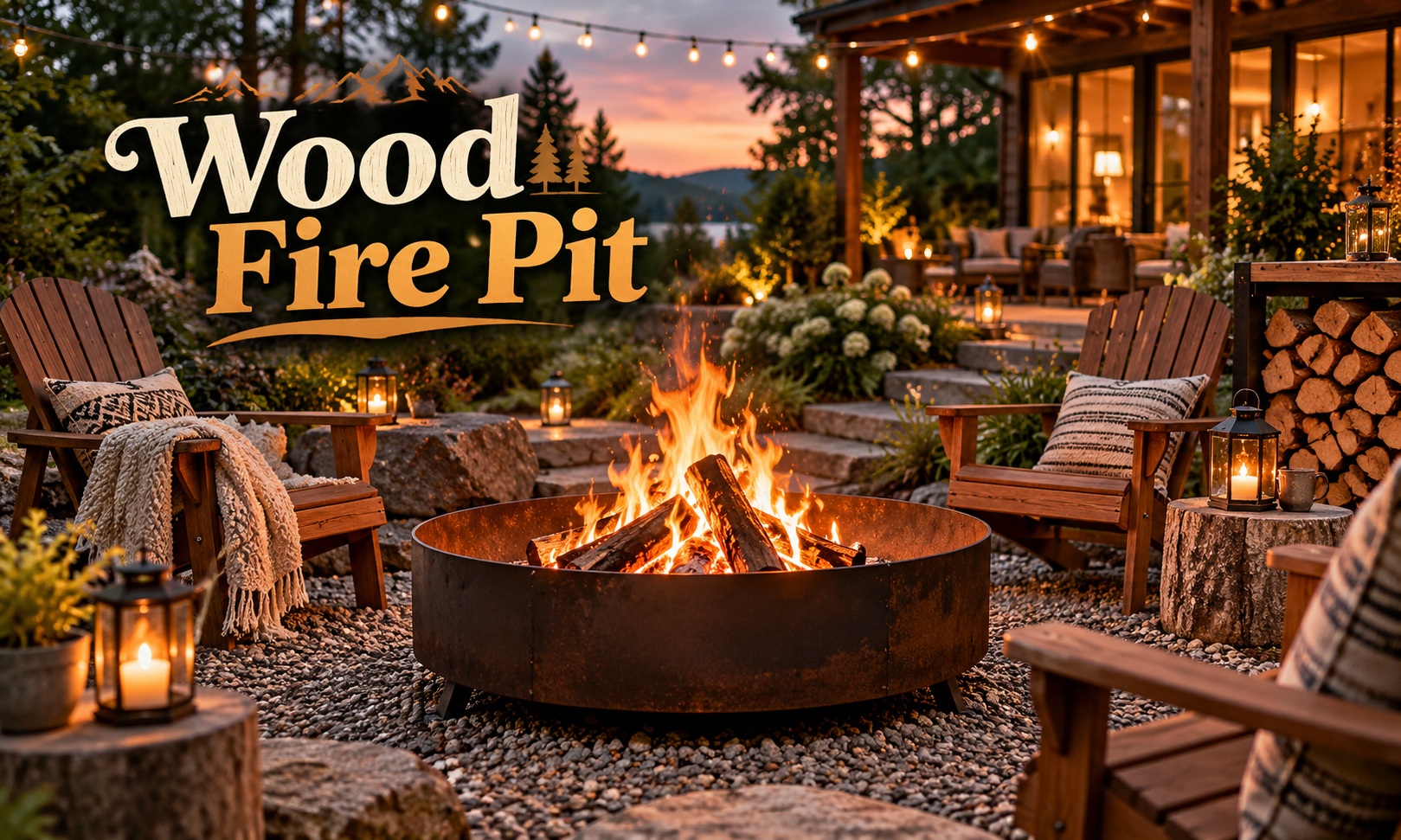
A wood fire pit burns real logs in an open or partly enclosed bowl, and it gives you crackle, scent, and a cooking fire that gas can’t quite match. In return you accept smoke, sparks, ash, and local rules about burning. If that trade sounds right, the details below will help you choose a good pit, burn the right wood, and keep the whole setup safe and tidy.
Why People Still Choose Wood
Gas is convenient, but wood has a pull of its own. The sound of a log settling, the smell of the smoke, and the way a fire changes as it burns down are things people sit outside for. A wood fire also puts out a lot of radiant heat and works well for cooking over coals.
The costs are real, though. Wood needs storage, takes effort to light, throws sparks, and leaves ash to clean. Some areas restrict wood fires during dry spells or ban them entirely, so check your local rules before you buy.
What to Look For in a Wood Fire Pit
Material
Steel is the most common and works well when it’s heavy enough to resist warping, with a heat-resistant finish. Cast iron holds heat and lasts, though it’s heavy and can crack from sudden temperature shocks. Copper and corten steel develop distinctive finishes over time. Built-in pits made of stone or firebrick suit permanent installations.
Size and Depth
A bowl roughly two to three feet across suits a small group, and larger pits suit bigger gatherings. A deeper bowl contains embers and blocks wind, while a shallow one throws more heat outward. Choose a size that suits the number of people and the space you have, bearing in mind the clearance your local rules require.
Spark Screen and Poker
A spark screen catches the embers that wood fires launch, which helps on breezy nights. It won’t make a fire safe on its own, but it’s a valuable layer of protection. A poker or long-handled tool lets you adjust logs without reaching in.
Drainage and Ash Handling
Drain holes keep rainwater from collecting in the bowl, which would otherwise rust the metal. Some pits include an ash pan that lifts out for emptying.
Heat Protection Underneath
A pit set on a wooden deck or grass needs a heat shield or a non-combustible surface beneath it. Many pits come with a short stand, but the ground below still needs protection from radiated heat and falling embers.
Low-Smoke Designs
Some double-wall steel pits are built to pull air through the walls and burn smoke a second time, producing visibly less smoke once the fire is hot. They tend to work best with dry hardwood and a proper starting technique, and they usually can’t eliminate smoke completely.
Choosing Firewood
What you burn matters as much as what you burn it in. The firewood should be seasoned, which means dried long enough to reduce moisture. Wet wood hisses, smokes heavily, and gives off little heat. Many people use a moisture meter, and wood below about 20 percent moisture is commonly considered ready for burning.
| Wood | How it burns | Good to know |
|---|---|---|
| Oak and hickory | Dense, long-lasting, and hot | Takes a long time to season, often a year or more |
| Maple and ash | Steady, with good heat | Burns well when properly dried |
| Birch | Lights easily and burns fast | Good for starting a fire, less so for lasting |
| Fruitwoods such as apple or cherry | Moderate burn with a pleasant aroma | Often favored for cooking fires |
| Pine and other softwoods | Burns quickly, pops and throws sparks | Resin can build up and make more smoke |
Never burn pressure-treated lumber, painted or stained wood, plywood, or trash, since they can release harmful fumes. Avoid driftwood from the sea as well, because the salt can create unpleasant byproducts. Store firewood off the ground, covered on top, and away from your house, where pests can hide.
How to Light and Maintain the Fire
Many people build a fire from the bottom up, but a top-down fire is often cleaner and easier to manage.
- Place the largest logs at the bottom in a tight grid, leaving small gaps for air.
- Add a layer of medium logs across them, then smaller sticks above.
- Finish with kindling and a natural fire starter on the very top.
- Light the top. The flames burn downward slowly, warming each layer and igniting it in turn, with less smoke than a typical bottom-lit fire.
Add logs gradually once the fire is established, and keep the flames below the rim of the pit. An overloaded pit throws sparks and heat in all directions. Space logs so air can circulate, because a fire starved of oxygen smolders and smokes.
Cutting Down Smoke
Smoke comes mostly from wet wood, a poor start, or too little air. Dry hardwood, a top-down lighting method, and a fire that isn’t packed too tightly all help. Placing seating upwind keeps smoke away from guests, though wind direction changes. Remember that your neighbors share the air too, and a fire that billows into their windows can create problems no spark screen will fix.
Cooking Over a Wood Fire Pit
Cooking works best over a bed of glowing coals rather than active flames, which char food on the outside while leaving the inside raw. Let the fire burn down for a while, then spread the coals and set a cooking grate over them. A grate with adjustable height lets you control the heat. Use food-safe grates and clean them thoroughly, and cook only with untreated wood. Foil packets, cast iron pans, and skewers all suit this style.
Safety and Rules
Keep the pit on level ground, well away from the house, fences, and overhanging trees, following your local distance rules. Have a hose, bucket of water, or extinguisher close at hand, and never leave a fire unattended. Don’t use gasoline or lighter fluid to start or revive a fire. Supervise children and pets, and watch wind and weather, since sparks travel farther on breezy nights.
Check with your local fire department about burn bans and permits, and ask your insurer if you aren’t sure whether a pit affects your coverage.
Cleaning and Care
After a fire, let the wood burn down and spread the ashes so they cool completely. Coals can stay hot for a long time, so wait until they’re cold before scooping ashes into a metal container kept away from anything flammable. Empty ash regularly, because it holds moisture that corrodes metal.
Keep the pit covered between uses, and touch up the finish with high-heat paint if it wears. Check welds, legs, and screens each season, and replace anything damaged before it fails.
Wood or Gas
If you want instant starts, little smoke, and no ash, gas will suit you better. If you care more about atmosphere and cooking, wood is hard to beat. Many households settle on wood for a main fire pit and a portable gas option for nights when a quick fire is all that’s wanted.
Getting the Most From It
A wood fire pit repays a little attention. Choose a sturdy pit, burn dry hardwood, light it from the top, and keep your tools and water close by. Follow those habits and you’ll have a fire that’s pleasant to sit by for years.