Small Greenhouse Kit Buying Guide for Backyards and Patios
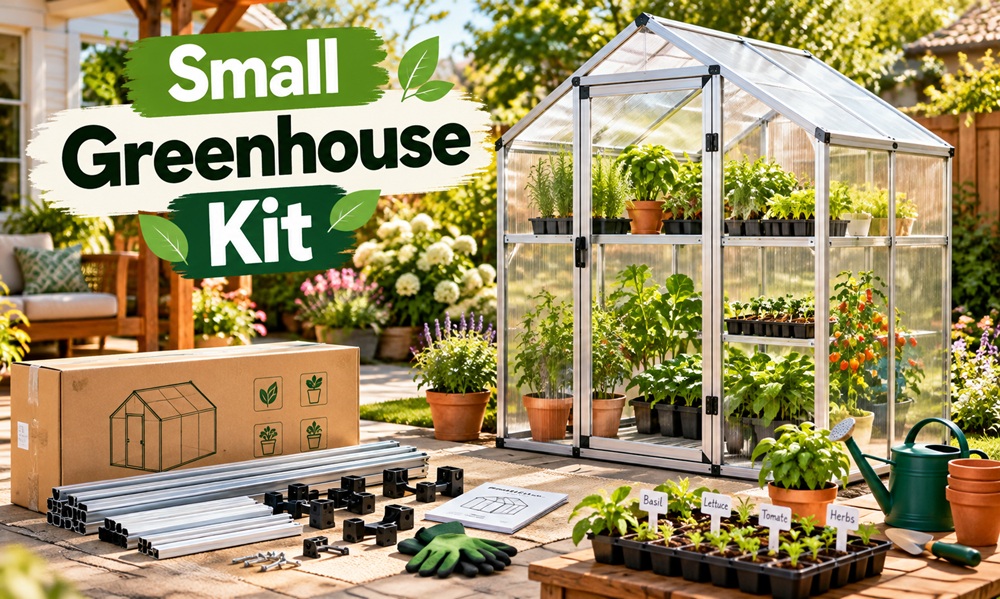
A small greenhouse kit arrives as pre-cut parts, panels, and hardware, so you can put up a working structure without designing or cutting anything yourself. For a beginner with limited space, a kit is often the fastest route to a greenhouse. The right one depends on your climate, your yard, and what you plan to grow.
What a Kit Includes and What It Doesn’t
Most kits contain the frame pieces, glazing panels or film, fasteners, a door, at least one vent, and instructions. Many leave out the parts that matter most for long-term use. A foundation or base, benches, shade, heating, and anchoring hardware are frequently sold separately, or not at all. Read the product listing closely so you know what you’re paying for and what you’ll need to add.
Types of Small Greenhouse Kits
| Type | Best for | Limits |
|---|---|---|
| Walk-in freestanding | Seed starting through full-season growing | Needs a level footprint and some clear space |
| Lean-to | Narrow spots beside a sunny wall | Needs a suitable wall and good sun exposure |
| Shelf or mini style | Seedlings, herbs, and small patios | Little heat control and no room to walk in |
| Hoop or tunnel kit | Covering garden beds for a longer season | Less insulation and shorter lifespan |
Think about how you’ll actually use the space. If you want to stand inside and work, a walk-in model is worth the footprint. If you only want to start seeds and protect a few pots, a compact shelf style could be plenty.
Frame Materials
Aluminum frames are lightweight, resist rust, and need little upkeep, which makes them a common choice for kits. Galvanized steel is stronger, and it can handle wind and snow better when properly built, though thin or poorly coated steel can rust over time. Wood looks warm and natural and is easy to modify, but it needs regular maintenance in wet climates. Plastic or PVC frames cost less and are fine for light-duty hoops, though they may flex or degrade in strong sun and wind.
Covering Options
Twin-wall polycarbonate panels are widely used in small kits because they’re light, insulate better than single layers, and are tough enough to handle impacts like hail or stray balls. Glass is clearer and ages well, though it’s heavier and requires a stronger frame. Plastic film is the lightest and cheapest, and it works for temporary or seasonal setups.
Check panel thickness and whether the panels have UV protection on the outer side, since both affect how long they last.
Features Worth Checking
- At least one roof vent, ideally adjustable, and a way to add more
- A door wide enough for pots and a wheelbarrow
- A base included, or clear instructions for building one
- Anchor points or guidance on securing the frame to the ground
- Wind and snow guidance in the manual, not just a vague claim
- Replacement panels and parts available from the seller
- A warranty that explains exactly what it covers
- A realistic assembly time and the number of people required
Matching a Kit to Your Climate
A kit that works in a mild coastal garden may struggle somewhere with heavy snow or strong winds. Look for roof pitches and frame designs that shed snow, and check whether the maker states wind or snow guidance and how it should be anchored. In hot climates, ventilation and shading matter more than insulation. In cold ones, insulating panels and a tight door seal come first. Ask local gardeners what has survived in your area, since they’ll tell you what the manual won’t.
Where to Put It
Place the kit where it gets plenty of light, ideally with the long side facing south in the Northern Hemisphere. Keep it clear of overhanging branches and close enough to a water source that daily care doesn’t become a chore. Leave space around the outside for opening doors and vents and for cleaning panels. If it sits against a fence or wall, make sure the vents can still open fully.
Choosing the Right Size
Measure the space you have, then add room around it for working, since you’ll need to reach doors, vents, and the sides of the frame. Small kits come in a wide range of sizes, from compact units a few feet across to walk-in models around ten feet on a side. Height matters too, because tomatoes and other tall plants outgrow a low roof quickly.
If you’re torn between two sizes, the larger one is usually the better choice. Most growers find they run out of room faster than expected.
Costs Beyond the Kit Itself
The sticker price is only part of the picture. Add the base materials, anchors, benches, shading, thermometers, and any heating or lighting you plan to use. Shipping for large or heavy boxes can also be significant. Compare the total, not just the kit, and consider whether paying more for a sturdier model will save you from replacing panels or reinforcing the frame later.
Accessories Worth Adding
A min and max thermometer is cheap and eye-opening. Automatic vent openers manage heat without power, and shade cloth protects plants in summer. Sturdy shelving or benches make better use of limited floor space, and a few rain barrels nearby supply water at no extra effort. These additions often do more for plant health than upgrading to a slightly larger kit.
Setting Up the Kit
Start with the foundation. A level base keeps the frame square and makes panels fit properly. Many kits can sit on a compacted gravel pad, a timber frame, or pavers, though some need to be bolted down to a more solid footing.
Then set aside a clear weekend. Sort the parts, check them against the list, and read the whole manual before starting. Keep bolts loose until the frame is square, and tighten everything once it is. Handle panels carefully, install them with the correct side facing out, and have a helper ready for the roof pieces. Finally, anchor the greenhouse securely before the first windy day.
Where Kits Can Fall Short
Budget kits sometimes use thin panels, light frames, or weak hardware, which struggle in wind or heavy snow. Instructions can be unclear, and replacement parts aren’t always available. Look for reviews from owners who have used a kit for more than one season, and notice what they say about storms, panel quality, and customer service.
If your climate is harsh, consider reinforcing the frame, adding extra bracing, or choosing a heavier-duty model from the start.
Who a Kit Suits Best
A kit makes sense for beginners, small yards, and anyone who wants a predictable set of parts and a clear path to a finished structure. If your space is an odd shape or you need something very large, building from plans may serve you better. In between, a well-chosen kit saves time and removes much of the guesswork.
Choose a kit that fits your space, suits your weather, and leaves room to grow, and put your effort into the base and the setup. A modest greenhouse that’s built well will do more for your plants than a larger one that’s put up in a hurry.