How to Set Up a Greenhouse for Healthy, Productive Plants
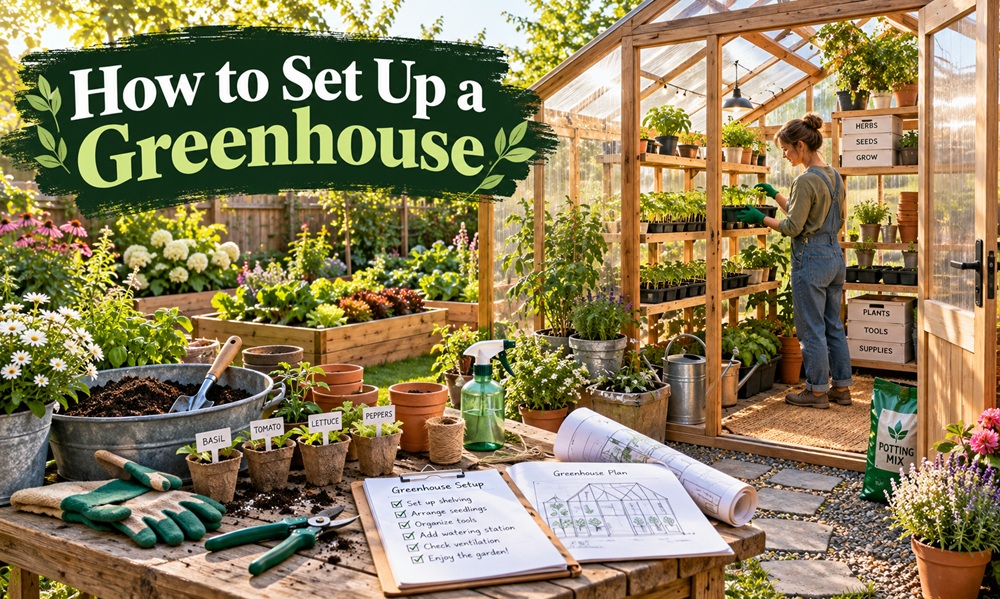
Setting up a greenhouse means arranging the layout, controlling temperature and airflow, and building a simple watering and care routine. If the structure is already standing, the first weekend goes to layout, thermometers, and checking the vents. The first few weeks go to learning how the space behaves through a full day and night.
Spend the First Day Watching
Before filling the benches, observe. Place a min and max thermometer at plant height and check it morning and evening. Notice where sun falls through the day, which corners run hot or cold, and where drafts or leaks show up. A few hours of watching tells you more than any plan on paper.
Test everything that opens. Make sure vents move freely, the door seals well, and any automatic openers react when the temperature rises. Fix leaks and gaps now, because it’s much easier to repair an empty greenhouse than a full one.
Plan the Layout
A good layout leaves you room to work. Paths should be at least about two feet wide so you can carry a pot or a watering can without brushing every leaf. A central walkway with benches on both sides works well in many small greenhouses, and a single bench along one wall suits narrow ones.
In the Northern Hemisphere, put taller plants on the north side so they don’t shade the shorter ones. Keep the door area clear, and place anything you visit daily, such as the water source and seedling trays, close to the entrance.
Benches and Shelving
Bench height should let you work without stooping, usually around waist level. Slatted or wire-mesh tops let water drain and air move beneath plants, which reduces rot. Avoid blocking vents or the lower part of the walls, since airflow is part of what keeps plants healthy. Heavy pots and wet soil add up, so make sure shelves are sturdy.
The Floor
Gravel, pavers, or concrete with a drain are easy to clean and handle spills. A damp floor also raises humidity, and some growers wet it down on hot days to cool the air. Bare soil floors work, though they track mud and can harbor pests.
Control the Climate
Temperature, airflow, and humidity are the three levers of a healthy greenhouse. Each one affects the others.
Heat in Cool Weather
Greenhouses warm up in sun but lose heat fast at night. Water barrels along the north wall store daytime warmth and release it slowly. Bubble wrap rated for greenhouse use, fixed to the inside of the frame, adds insulation in winter. If you need active heating, a thermostat-controlled electric heater is the safest and most predictable option. Avoid unvented fuel heaters in a closed space, since they release combustion gases and moisture.
Cooling and Shade in Summer
Summer is usually the bigger challenge. Open the vents and door on warm days, and use shade cloth or a removable shading paint to cut intense sun. Wetting down the floor and keeping plants well watered helps cool the air through evaporation. Larger structures may need an exhaust fan with a thermostat.
Airflow
Moving air strengthens stems and discourages fungal disease. Even in cold months, open a vent for a short time on mild days to swap stale, humid air for fresh. A small oscillating fan running during the day keeps air from stagnating, especially in tight, crowded greenhouses.
Humidity
Humidity that stays too high leads to gray mold and mildew, while very dry air stresses plants and encourages spider mites. Water in the morning so leaves dry before night, and space plants so air can pass between them. A simple hygrometer takes the guesswork out.
Set Up Watering
Choose a method that fits your time. A hose with a gentle nozzle works for small collections. Drip lines or capillary matting save effort and give plants steady moisture. Rain barrels provide water that’s warmer and free of the chemicals found in some tap supplies.
Water thoroughly and less often rather than giving a little every day. Lift a pot or press a finger into the mix to check dryness. Morning watering is generally best, particularly in cooler seasons.
Choose Soil, Pots, and Cleanliness Habits
Use a quality potting mix for containers, since garden soil drains poorly in pots and brings pests. In-ground beds should be amended with compost. Scrub pots and trays between uses, and clean tools with a diluted disinfectant. Pick up fallen leaves and dead plants promptly, because decaying material invites mold and insects.
Pick the First Plants
Start with plants matched to the temperatures your greenhouse can hold. In cooler months, lettuce, spinach, kale, and many herbs do well under cover. In warm months, tomatoes, peppers, cucumbers, and basil are popular. Seed starting is another strong first use, giving you a head start on the garden outdoors.
Group plants with similar water and temperature needs, and add new ones gradually while you learn how the space runs.
Manage Light Through the Year
Sunlight is rarely a problem in summer, but short winter days can leave plants stretched and pale. Wash the covering panels at least a couple of times a year, since dust, algae, and grime cut the light reaching leaves. In dark months, a full-spectrum grow light on a timer can fill the gap for seedlings and leafy crops. In summer the opposite applies, and shade cloth protects tender leaves from scorching.
Keep Pests Under Control
Enclosed spaces help pests multiply, so prevention matters. Inspect new plants, including the undersides of leaves, before bringing them in, and keep them apart for a week or two if you can. Sticky traps give early warning of flying insects. Screening over vents keeps many pests out, and healthy, uncrowded plants resist problems better.
Build a Simple Routine
- Check the thermometer and adjust vents each morning
- Water as needed, favoring the morning
- Look over plants for pests, wilting, or disease
- Remove dead leaves and debris
- Clean surfaces and wash covering panels a few times a year so light can pass through
Keep Simple Notes
A small notebook or a phone note makes a surprising difference. Record the highest and lowest temperatures you see, what you planted and when, and anything that struggled. After a season you’ll have your own local guide, showing which corner runs cold, how early you can start seedlings, and when the first vents need opening in spring.
Setup Mistakes Worth Avoiding
Overcrowding is the most common one, since small seedlings look lonely and are easy to overplant. Overwatering comes next, particularly in cold weather when plants use less water. Heating the whole space when only a small area needs it wastes energy, and an insulated corner or a propagation mat for seedlings may do the job. Finally, don’t wait for a heat wave to test your ventilation. Try it on the first warm spring day, when mistakes are still cheap.
Adjust With the Seasons
Spring calls for vent management as days warm and seedlings grow quickly. Summer is about shade, water, and airflow. Fall means cleaning, bringing tender plants in, and getting insulation ready. Winter shifts the focus to protecting plants from the cold and keeping humidity low enough to avoid disease.
Within a few months you’ll know exactly how your greenhouse behaves, and the routine will feel natural. Small adjustments, made early, keep problems from growing.