Cheap Front Yard Landscaping Ideas That Make the House Look Cared For
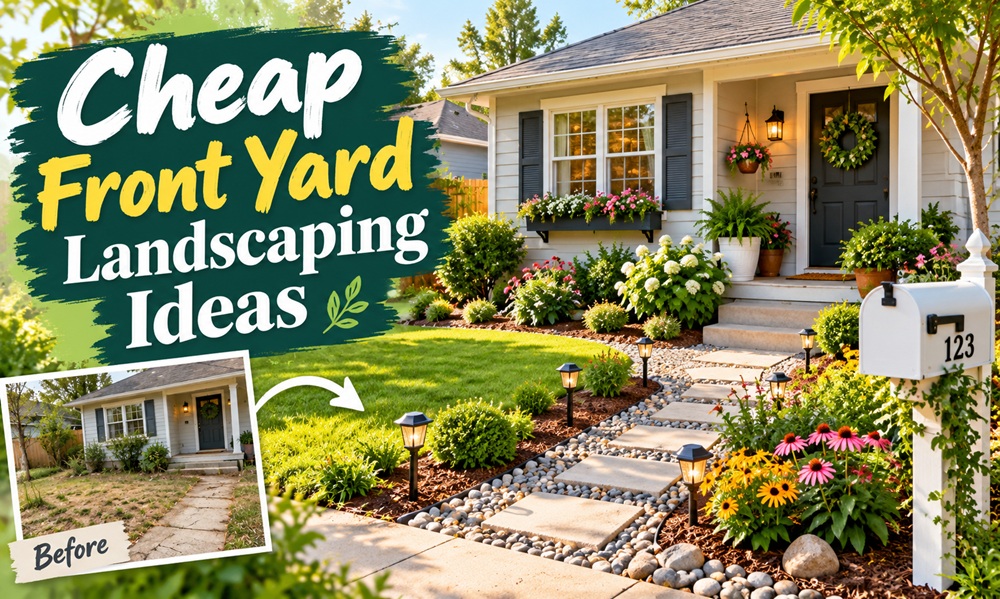
The cheapest front yard landscaping ideas rarely involve buying a cart full of plants. The biggest changes usually come from cleaning up what’s already there, giving the beds a sharp edge, covering bare soil, and putting a little color near the front door where everyone looks first. A yard with clean lines and a few well-chosen plants reads as cared for, even when the total spend is small.
The ideas below are arranged roughly in the order you’d want to tackle them, starting with the ones that cost nothing at all.
Start by Taking Things Away
Before you buy anything, pull out what doesn’t belong. Dead shrubs, weeds along the walkway, tired annuals, and a juniper that has swallowed a window all make a front yard look neglected. It costs only time, and it shows you how much room you really have.
Prune before you replace. Plenty of overgrown shrubs can be cut back hard and will recover, depending on the species, so a shaggy but healthy plant is a free asset. One that’s dead through the middle or clearly diseased is better off removed.
The lawn deserves a look too. Thin turf can often be repaired with overseeding at the right time of year for your region, which costs far less than laying sod. If certain patches never grow because of deep shade or constant foot traffic, stop fighting them. Those spots are good candidates for a different treatment, which comes up a little later.
Edges and Mulch Give the Best Return
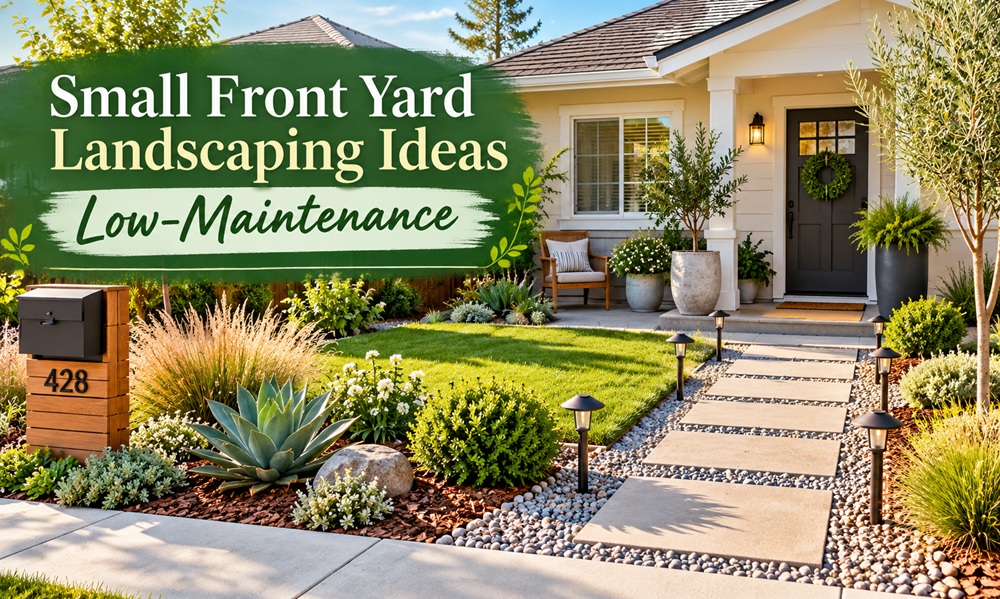
If you only do one thing, define the beds. A crisp line between lawn and planting bed, cut with a flat spade or a half-moon edger, makes a yard look planned. It’s free apart from a tool you may already own, and a few hours of work can change the whole look of the property.
Next, cover the bare soil. A layer of mulch about two to three inches deep keeps weeds down, holds moisture, and gives plants a tidy backdrop. Pull it back a few inches from trunks and stems so the bark doesn’t stay damp.
Bagged mulch gets expensive fast. Buying by the cubic yard from a landscape supplier is often cheaper once you need more than a handful of bags, and some towns and tree services give away wood chips for free. Shredded hardwood, pine bark, and chips all do the job, so pick whatever is easiest to find locally rather than chasing a particular color.
Spend Little on Plants by Being Patient
Plants are where budgets get away from people, so a few habits help.
Buy small. A one-gallon perennial costs much less than a five-gallon one and often catches up within a couple of seasons. Time is a perfectly good budget tool.
Divide and swap. Hostas, daylilies, ornamental grasses, and many other perennials can be split into several plants. Neighbors and local gardening groups hand out divisions every spring and fall, and most gardeners are happy to share if you ask.
Shop late in the season. Garden centers mark down shrubs and perennials in late summer and fall, and in many climates fall is a fine time to plant because roots settle in before the next growing season. Look for firm stems and healthy leaves rather than grabbing whatever is cheapest.
Grow from seed where it makes sense. Zinnias, cosmos, marigolds, and sunflowers cost pennies per plant when started from seed, and they fill gaps quickly in the first summer.
Whatever you choose, match it to your site. A plant that suits your sun, soil, and climate won’t need replacing. Your county extension office or a regional native plant society usually publishes lists of plants that do well locally, and the information is often free.
Make the Front Door the Focal Point
People’s eyes go to the entry, so a small amount of effort there stretches a long way. A pair of containers on either side of the door gives symmetry and color without any digging. Thrift stores and yard sales are good sources for pots, and an old bucket or crate with drainage holes drilled in the bottom works as well as anything sold in a garden aisle.
For planting, combine something upright, something bushy, and something that spills over the edge. One pot filled this way looks more finished than three pots with a single plant each.
Small details count too. A fresh coat of paint on the door, a new set of house numbers, and a mailbox that isn’t leaning are inexpensive, and they frame everything else you’ve done.
Replace Lawn Where It Struggles
Grass costs money to keep alive, and it’s the first thing to fail in shade, on slopes, and along narrow strips beside driveways. Converting those areas to a mulched bed, a gravel patch, or a low groundcover can reduce your mowing and watering over time.
Creeping thyme, sedum, and clover are common groundcover choices, though what thrives depends on your climate and sun. Ask a local nursery what spreads well in your area. Smothering the existing grass with cardboard and mulch, rather than digging it out, is a low-cost way to clear the space with little effort.
Use Stone, Gravel, and Salvaged Materials
Hardscape tends to be the pricey part of a landscape, but there are ways around that. A simple path of gravel or stepping stones can replace a worn dirt shortcut across the lawn. Reclaimed brick and flagstone show up regularly on local resale listings, and building material reuse stores often carry pavers, edging, and stone at a fraction of new prices.
Rocks gathered from your own property can edge a bed or form a dry creek bed that handles runoff. Stick to stone that’s actually yours, though. Taking rocks from public land or someone else’s property causes real trouble.
Add Light Without Rewiring
Low-voltage or solar path lights make a front yard look inviting after dark and add a bit of safety on steps. Solar lights vary a lot in quality, so buy one or two first and see how long they stay bright before you commit to a full set. Placing them where they get several hours of direct sun matters more than the brand.
Where to Save and Where to Spend
| Project | Low-cost route | Worth paying a bit more for |
|---|---|---|
| Mulch | Free wood chips or bulk by the yard | Rarely anything, bulk is usually enough |
| Plants | Divisions, seeds, small sizes | A few healthy shrubs for structure |
| Edging | Hand-cut spade edge | Steel or stone edging for curved beds with heavy use |
| Pots | Thrifted or repurposed containers | Frost-proof pots if winters are harsh |
| Lighting | A few solar stakes | Low-voltage fixtures for long-term reliability |
Quality counts most for the things that hold the yard together, like a few well-chosen shrubs, because they’ll still be there in ten years. Everything else can be done on the cheap and upgraded gradually.
A Sensible Order for a Weekend or Two
Clean up and prune first. Edge the beds and lay mulch second. Plant containers and any divisions you’ve gathered third. Add lighting and small details last. By then you’ll have a clear sense of what the yard still needs, and any money left over can go toward one or two bigger plants rather than a pile of small purchases that don’t add up.
The best cheap front yard landscaping ideas are mostly about restraint. A few good decisions, repeated across the whole yard, beat a scattering of expensive ones.