Small Front Yard Landscaping Ideas for Low Maintenance
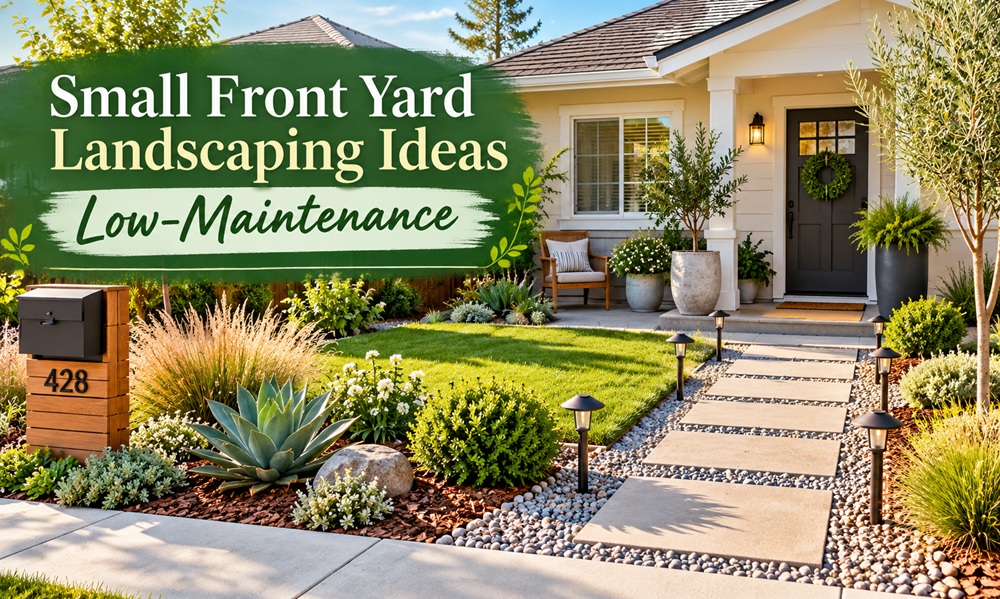
Small front yards are easier to get right than big ones, and they can look better with less work. The trick is limiting what you include and choosing things that stay put and behave themselves. Here’s the short version.
- Keep the plant list short and repeat what works.
- Use shrubs, groundcovers, and ornamental grasses for structure.
- Cover bare soil with mulch, gravel, or low plants.
- Shrink the lawn, or replace it entirely.
- Add one focal point instead of several.
- Install solid edging so you aren’t recutting lines all summer.
The rest of this article explains how each choice saves effort and what to watch for.
Why Small Spaces Need Fewer Decisions
A small yard has little room to hide mistakes. One oversized plant, a crowded bed, or clutter along the walk shows immediately. That turns into an advantage once you accept it. With fewer things to manage, a handful of strong choices can carry the whole space.
Low maintenance doesn’t mean no maintenance. Every yard needs some watering while plants establish, a seasonal tidy, and a look-over now and then. The goal is shrinking the weekly chores to something you can finish in a few minutes.
Start With the Ground
Most upkeep comes from whatever covers the soil, so decide that first.
Shrink the Lawn
Mowing a tiny rectangle takes less time than the trimming around it. Edging, string-trimming, and fussing with the corners eat up most of the effort. Reduce the lawn to a simple shape with one clean curve or a straight line, or remove it altogether. If you keep grass, choose a type suited to your climate so it isn’t struggling and demanding constant watering.
Mulch Over Bare Soil
Two to three inches of mulch smothers most weeds and holds moisture. It breaks down over time, so plan to top it up every year or two. Many gardeners skip landscape fabric in planting beds, since debris collects on top and weeds root right through it, but fabric can make sense under gravel paths. Choose based on how the area will be used.
Gravel and Stone
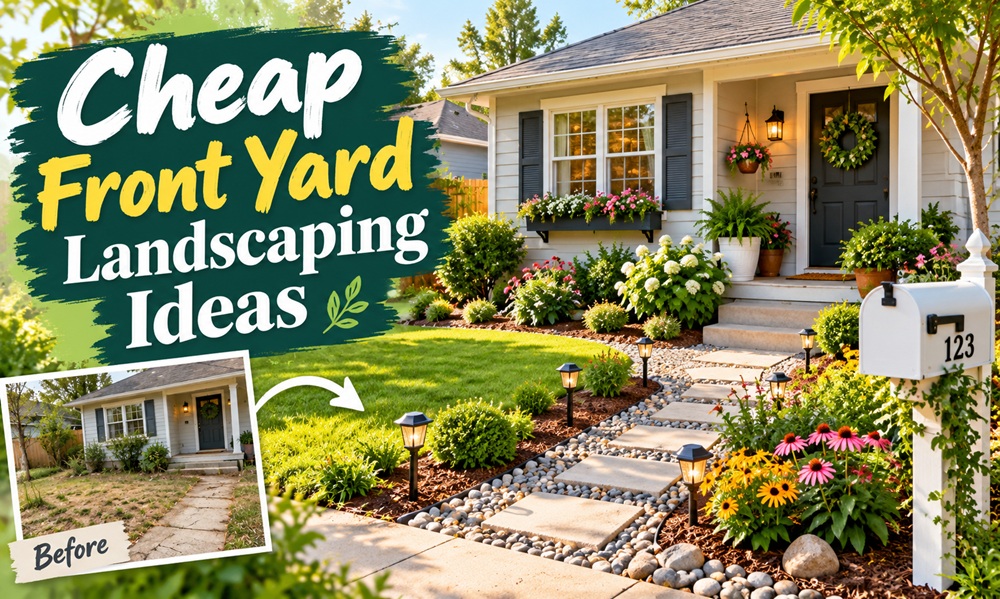
Gravel suits sunny, dry spots and the area beside a walkway. Put edging around it so the stones stay where you want them, and expect to blow or rake leaves off now and then. A gravel patch with a few boulders and a pot of grasses can look intentional with almost no ongoing work.
Groundcovers
Low-growing plants spread to fill space and crowd out weeds. Sedum and creeping thyme tend to like sun and sharp drainage. Shade calls for different options, such as lamium or hardy ferns. Check that whatever you pick isn’t considered invasive in your region, because some popular groundcovers escape into wild areas.
A word on irrigation belongs here as well. New plants need regular water for their first season or two while roots spread, and skipping that stage is how people end up replanting. Once they’re established, many shrubs and perennials get by on far less, which is when a timer and drip line start paying for themselves.
Plants That Don’t Ask for Much
Plant choice decides how many weekends you’ll spend outside. The following groups tend to be forgiving, though the right pick depends on your climate, sun, and soil.
| Plant type | Typical upkeep | Good fit for |
|---|---|---|
| Compact evergreen shrubs | Light shaping once or twice a year | Year-round structure near the entry |
| Ornamental grasses | One cutback in late winter | Sunny beds that need movement and texture |
| Sedum and other succulents | Very little once established | Hot, dry, well-drained spots |
| Daylilies and coneflowers | Occasional dividing and deadheading | Color in sunny beds |
| Hostas and ferns | Watch for slugs, remove spent leaves | Shady areas beside the house |
Read the plant tag for mature height and width, and believe it. Dwarf and compact varieties exist for many popular shrubs, and they save you from constant pruning. Skip plants that drop messy fruit onto walkways, have thorns near the path, or spread aggressively, since all three create chores.
Group plants by water needs as well. A thirsty hydrangea next to a drought-loving sedum means one of them will always be unhappy. Drip irrigation or soaker hoses on a simple timer can cut watering to almost nothing once plants are established.
Give the Yard One Star
A small yard looks calmer when the eye has one place to land. That might be a small ornamental tree, a large glazed pot, a bench by the door, or a boulder with plants tucked around it. Everything else supports it.
Repeating a plant or color along the front creates a sense of rhythm that makes a tight space feel larger. Three of the same grass planted together usually reads better than three different plants scattered in a row.
Paths, Edging, and Structure
A walkway should be comfortable to use. Many designers suggest about three feet wide for a main front path, which lets two people pass without stepping into the bed. If space is tight, make it as wide as you can without cutting the planting areas to slivers.
Edging deserves real attention in a low-maintenance plan. Steel, stone, or brick set firmly in the ground keeps mulch in and grass out, and it saves you from re-cutting a line every few weeks. Plastic edging is cheap but tends to heave and pop up in many climates, so think about how long you want the work to last.
Three Layouts That Work in Small Yards
A Foundation Bed and Gravel Strip
Run one deep planting bed along the house, filled with a few shrubs, a couple of perennials, and a grass. Add a strip of gravel between the bed and the walk. There’s no lawn to mow, and the whole thing can be maintained in a short seasonal session.
A Small Lawn With a Generous Border
Keep a compact patch of grass but frame it with a wide border of shrubs and perennials. The lawn gives you a calm green rectangle, and the border carries the interest. The wide border is what keeps edging small and the lawn simple to mow.
A Courtyard Feel With No Grass
Replace the lawn with pavers or gravel, add a pair of containers, and plant a small tree in one corner. This works well when the yard is shady, sloped, or used mostly as a path to the door.
Mistakes That Create Extra Work
Overplanting is the big one. Plants sold in small pots look sparse, so people cram in too many, then spend years thinning and pruning. Leave the room the tag recommends.
Another common mistake is forgetting winter. Think about snow piles from the driveway, salt along the walk, and how evergreens or grasses will look in the bare months.
Finally, avoid planting right against the house. Many shrubs need space from the foundation for air movement and for access when you need to paint or repair siding.
A Few Minutes at a Time
A well-planned small front yard shouldn’t need more than a quick walk-through once a week. Pull a stray weed, check that irrigation is running, and sweep the path. Then twice a year, give the shrubs a light trim and refresh the mulch. If your yard asks for much more than that, simplify it until it doesn’t.