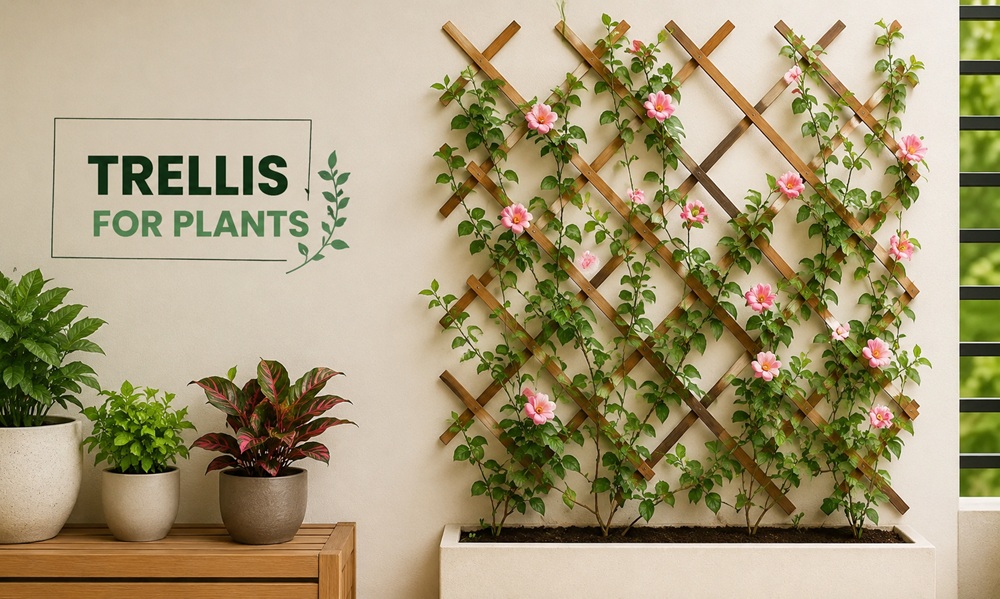
Tag: garden trellis

  • Trellis for Plants and How to Match One to Your Climber

    Trellis for Plants and How to Match One to Your Climber

    The best trellis for plants depends less on how it looks and more on how the plant climbs. A pea plant grabs with tiny tendrils, a pole bean wraps its whole stem around a support, and a climbing rose does neither and just leans where you tie it. Give each one the wrong kind of frame and it flops, sprawls, or never gets going.

    So before you shop or build, work out what your plant actually does.

    Why Bother With a Trellis at All

    Training plants upward saves ground space, which matters in small gardens and raised beds. It also lifts leaves and fruit off the soil, so air moves around them and moisture dries faster. That can reduce some disease problems, and it makes harvesting easier on your back. Many climbers also simply look better growing up than sprawling across the ground.

    The Four Ways Plants Climb

    Twiners

    Twining plants wind their stems around whatever they find. Pole beans, morning glories, honeysuckle, and wisteria all do this. They need supports that are thin enough to wrap around, such as strings, narrow poles, wires, or slim lattice strips. A support that is much thicker than an inch or two gives them nothing to wrap, so a wide wooden post can leave a bean plant stranded.

    Tendril climbers

    Peas, cucumbers, grapes, and sweet peas send out slender curling tendrils that grab and coil. Clematis behaves similarly, using twisting leaf stalks. These plants need fine structures like mesh, netting, thin wire grids, or twiggy branches pushed into the soil. Thin crosspieces spaced a few inches apart work well, while smooth, wide panels do not.

    Clingers

    English ivy and climbing hydrangea attach themselves with small aerial roots or pads. They don’t need a trellis as much as a wall or a sturdy surface to hold on to. Be careful with them, because those roots can work into mortar, damage paint, and loosen wood. If you want one near your house, a freestanding frame set a little away from the wall is the safer choice.

    Scramblers and leaners

    Climbing roses and some jasmines have no true climbing mechanism. They send up long canes that need to be tied in place. These plants need a strong, open framework where you can attach stems every foot or so with soft ties. A wire grid on a wall or a solid wooden frame suits them better than fine netting.

    Quick Matching Guide

    Plant type Examples What works best
    Twiners Pole beans, morning glory, honeysuckle Poles, strings, thin wires, obelisks
    Tendril climbers Peas, cucumbers, grapes, clematis Mesh, netting, thin grids, twiggy supports
    Clingers English ivy, climbing hydrangea A sturdy wall or a freestanding frame nearby
    Scramblers Climbing roses, some jasmines Strong wire grids and frames with tie points

    Common Trellis Shapes

    Flat panels are the classic choice, set against a wall or fence or freestanding in a bed. They work well for most tendril climbers and scramblers.

    Obelisks and teepees are tall, narrow towers that look good in borders and containers. They suit twiners and lightweight climbers like sweet peas.

    Arches and arbors span a path and carry heavier plants such as roses and grapes, so the frame has to be stout and well anchored.

    A-frames lean two panels together and work well over garden beds for cucumbers, squash, and beans, since the fruit hangs down where it’s easy to pick.

    Netting stretched between posts is cheap and light, and it’s a favorite for peas and cucumbers. It needs strong end posts to stay taut.

    Trellis Ideas for Common Plants

    Peas do well on netting or a grid of thin wires about four to five feet tall, since their tendrils grab fine material easily. Pole beans prefer strings, narrow poles, or a teepee of canes that rise six feet or more. Cucumbers can climb a sturdy panel or an A-frame, and trained upward they produce straighter fruit that is easier to spot.

    For flowers, sweet peas thrive on mesh or twiggy branches, while clematis needs thin supports like wire or lattice strips near its base so it can start climbing early. Climbing roses want a heavy wire grid or wooden frame where each cane can be tied. Grapes need a very strong structure with posts set deep and wires that can bear a heavy crop. If you want a small container climber on a patio, a compact obelisk with a fast annual vine such as black-eyed Susan vine is a manageable place to start.

    Choosing Materials

    Wood looks natural and can be cut to any size. Cedar and redwood last longest outdoors without treatment, and other woods benefit from sealing. Metal frames, especially powder-coated steel or aluminum, are durable and slim, though metal can get hot in strong sun and may scorch tender stems against it. Bamboo is inexpensive and works well for seasonal crops, but it breaks down after a year or two. Plastic-coated mesh and nylon netting suit lightweight annuals and are simple to replace.

    For permanent plantings such as wisteria or grapes, invest in the strongest material you can. For annual vegetables, something cheaper and temporary usually does the job.

    Common Mistakes

    One frequent problem is picking a support the plant can’t grip, such as a smooth wide board for a tendril climber. Another is underestimating mature weight, which leads to leaning or collapsing frames by midsummer. Planting too close to the base crowds the roots, and tying stems too tightly can cut into growth as it thickens. Finally, many gardeners set the trellis up after the plant has already sprawled, which makes training harder. Installing the support at planting time keeps things simple.

    Size, Strength, and Anchoring

    A plant on a trellis adds weight every season, and wet foliage and wind add more. Match the strength of the frame to the mature size of the plant rather than the size you bring home from the nursery. Set posts deep enough to resist leaning, and brace tall freestanding frames, especially in windy areas. If you attach a panel to a wall, leave a gap of a couple of inches behind it for airflow, which helps prevent damp problems on the wall and the plant.

    Where to Put It

    Most flowering and fruiting climbers want several hours of direct sun. Pick the spot first, then choose the plant. In cold climates, a south- or west-facing wall can create a warm pocket, while in hot ones a trellis can provide shade for plants growing beneath it. Leave space around the base of the trellis so roots aren’t crowded and you can reach the plants for watering and pruning.

    Training the Plant

    Young plants rarely find the support on their own. Guide the first shoots toward the trellis and tie them loosely with soft twine, plant clips, or strips of cloth. Avoid wire or tight ties that can cut into the stem as it thickens. Tendril climbers usually need only an occasional nudge, while scramblers need regular tying as they grow. Spread stems out sideways when you can, since horizontal training often leads to more flowers and fruit than letting everything shoot straight up.

    End-of-Season Care

    For annuals, pull spent plants and compost healthy material, then clean the trellis so disease doesn’t carry over. For perennials, prune at the proper time for the species and check ties for tightness. Look over wood for rot, metal for rust, and screws for looseness. Store bamboo and netting somewhere dry over winter.

    If you’re still unsure which one to pick, start with the plant. Look at how it climbs, choose a support it can really grip, and build or buy that. The trellis only does its job when the plant can use it.
  • How to Make a Trellis Three Different Ways

    How to Make a Trellis Three Different Ways

    A trellis is just a frame that gives climbing plants something to hold on to. You can make one in an afternoon with a few boards and a box of screws, or in under an hour with bamboo canes and a ball of twine. The right way to make a trellis depends on what you’re growing, how much weight it needs to carry, and where it will stand.

    Below are three builds that cover most garden situations. The first is a sturdy wooden ladder trellis, the second is a quick bamboo teepee, and the third is a wire trellis that runs along a wall or fence. Pick the one that matches your plants and your patience.

    A Few Decisions Before You Start

    Think about the plant first. Peas and sweet peas are light and happy on thin supports. Pole beans and cucumbers need something a bit stronger. Heavy climbers such as grapes, wisteria, and mature clematis put real load on a frame, and a flimsy trellis will lean or collapse under them.

    Next, think about height. Choose a trellis that is as tall as the plant will grow, plus a little extra, because most climbers keep reaching long after you expect them to stop. Then think about placement. Most flowering and fruiting climbers want several hours of direct sun, so set the trellis where light reaches it.

    Build Best for Effort Main materials
    Wooden ladder trellis Peas, beans, clematis, sweet peas An afternoon Wood strips, screws
    Bamboo teepee Pole beans, cucumbers, sweet peas Under an hour Bamboo canes, twine
    Wall wire trellis Climbing roses, jasmine, espaliered fruit A couple of hours Eye screws, galvanized or stainless wire

    Build One, a Wooden Ladder Trellis

    This design looks like a tall ladder. It stands on its own in a bed or can lean against a wall.

    You’ll need two uprights cut from 2×2 lumber, around six feet long for a typical bed. Add crosspieces cut from 1×2 strips, and wood screws, a drill, a saw, a tape measure, and a square. Cedar and redwood resist decay naturally and are popular for garden projects. Some gardeners prefer them around edible plants, though pressure-treated lumber is also widely used, so follow the manufacturer’s guidance if you go that route.

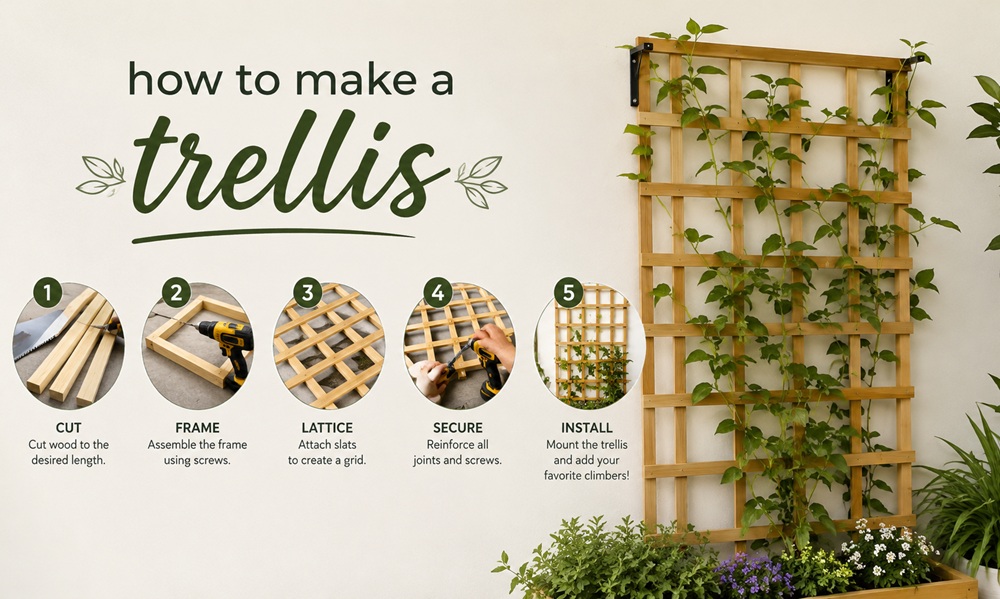
    1. Cut the two uprights to the same length and lay them flat on the ground, parallel, about 18 to 24 inches apart.
    2. Mark crosspiece positions every 8 to 12 inches along both uprights, starting a foot from the bottom.
    3. Cut the 1×2 strips to the width between the uprights, plus the width of the wood if you want them to sit on the outside faces.
    4. Drill pilot holes at each mark so the wood doesn’t split, then screw each crosspiece to the uprights with two screws per end.
    5. Check that the frame is square by measuring the diagonals. If they match, you’re set.
    6. Sand rough edges and apply an exterior sealer if you like. Let it dry fully before planting.

    To anchor it, drive the bottoms of the uprights 10 to 12 inches into the soil, or screw the frame to the side of a raised bed. In windy spots, add a short stake on each side and tie it off.

    Build Two, a Bamboo Teepee

    This one is quick and cheap, and it works nicely for annual climbers.

    Gather five or six bamboo canes between six and eight feet long. Push each cane 8 to 12 inches into the soil in a circle about two feet across, leaning the tops together. Bind them tightly near the top with strong twine, wrapping several times and finishing with a firm knot. Then wind twine around the canes at intervals of about a foot, pulling it snug at each cane, so the climbers have horizontal rungs to grab.

    Leave one gap in the circle if you want easy access for harvesting. Sweet peas, pole beans, and cucumbers all grow well on this shape, and kids tend to enjoy sitting inside a bean teepee in summer. Bamboo lasts a season or two outdoors. At the end of the season, pull it up and store it dry so it holds up longer.

    Build Three, a Wire Trellis for a Wall or Fence

    A wire trellis is almost invisible, which makes it good for climbing roses, jasmine, and trained fruit trees on a visible wall.

    Choose the hardware

    Use galvanized or stainless steel wire so it doesn’t rust, and eye screws or heavy-duty wall hooks to hold it. For a brick or masonry wall, drill with a masonry bit and use appropriate wall plugs. For a wood fence or siding, screw directly into solid framing instead of thin boards. Heavier plants need stronger hardware, so size it to the plant, not just the look.

    Space and string the wire

    Mark rows about 12 inches apart, starting 12 to 18 inches above the ground. Install an eye screw at each end of every row, and add a middle support for longer runs. Use eye screws with enough length that the wire sits two to three inches away from the wall, which gives air room to move around the plant and cuts down on mildew. Thread the wire through one eye, pull it taut by hand, loop it back, and twist it off. Turnbuckles or wire tensioners make it easy to tighten later if the wire sags.

    Train the plant

    Tie the first shoots loosely to the wire with soft garden twine, fanning them out sideways rather than straight up, since horizontal growth tends to encourage more flowers and fruit. Check the ties each season so they don’t bite into growing stems.

    Sizing the Build to the Plant

    Dimensions are easier to settle if you work backward from the plant. Check the mature height and spread on the plant tag or seed packet, then add a foot to the height so the top shoots have somewhere to go. For a pair of pea rows, a trellis four to five feet tall is usually plenty. For pole beans and cucumbers, six to eight feet gives them room to keep producing. Width matters less than strength, but a frame that is much narrower than the planted row leaves outer plants without support.

    Weight is the other factor. A mature grapevine or wisteria can weigh far more than a bean vine, and wet foliage in a storm adds still more. If you’re unsure, build heavier than you think you need. Thicker uprights, closer fastener spacing, and deeper anchoring cost very little compared with rebuilding a collapsed trellis in midsummer.

    Making Any Trellis Last Longer

    Seal or stain wood before planting and again every couple of years. Replace twine annually, since it rots. Check screws and eye bolts at the start of each growing season, because plants add weight as they mature. Wire loosens over time, so retighten it in spring.

    Where to Place It

    Set the trellis where the plant will get several hours of direct sun, and leave room to walk around or reach it for pruning and harvesting. If the trellis stands against a wall or fence, keep it a couple of inches off the surface so air can circulate. In windy yards, place taller structures where a building or hedge breaks the worst of the gusts, or add braces at the base.

    Mistakes to Skip

    The most common one is building too small. A trellis that fits a young plant usually can’t handle the full-grown vine. Another is placing it in shade and wondering why the plant won’t bloom. Planting too close to the base crowds the roots and invites rot, so leave a few inches between the stems and the frame. Finally, check that wire and twine don’t girdle woody stems as they thicken.

    A homemade trellis doesn’t need to be fancy. It needs to be strong enough, tall enough, and in the right spot, and the plants will take care of the rest.